
Useful AI that does not need a data centre.
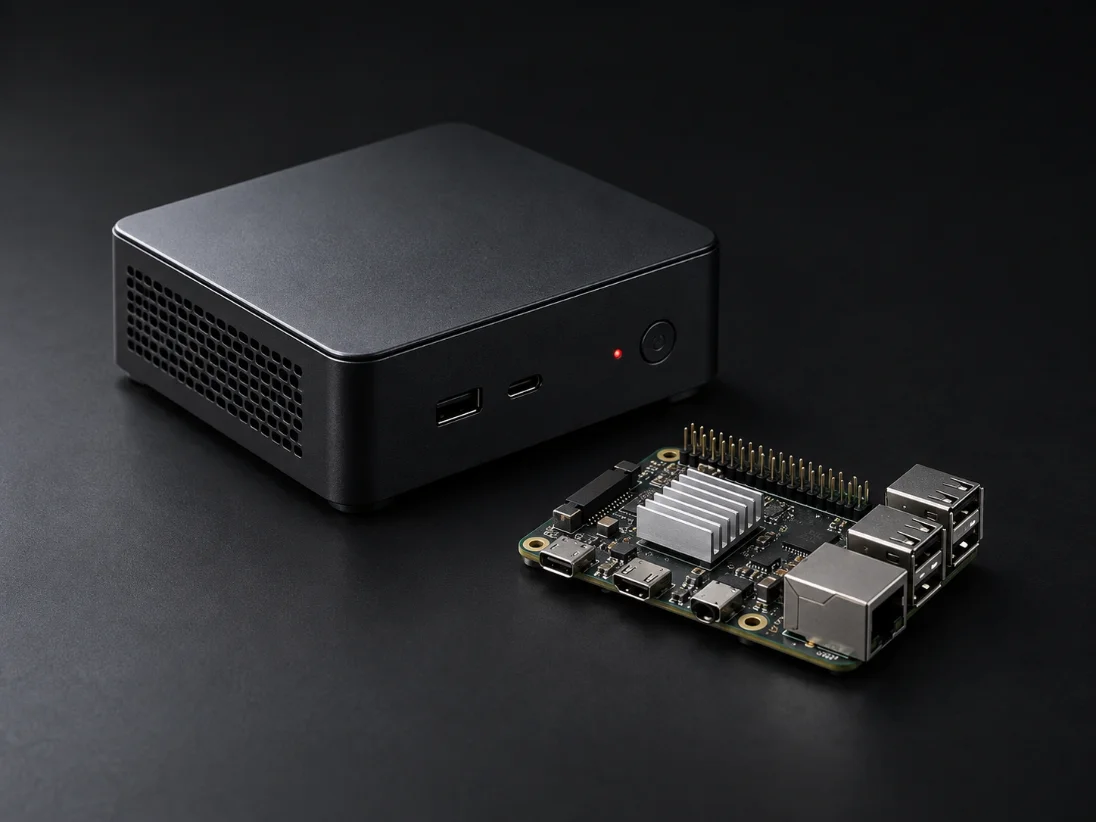
We build small language models from scratch — our own data, our own code, our own weights — small enough to run on a modest server, a mini PC, or in time a phone. Private by construction rather than by promise.
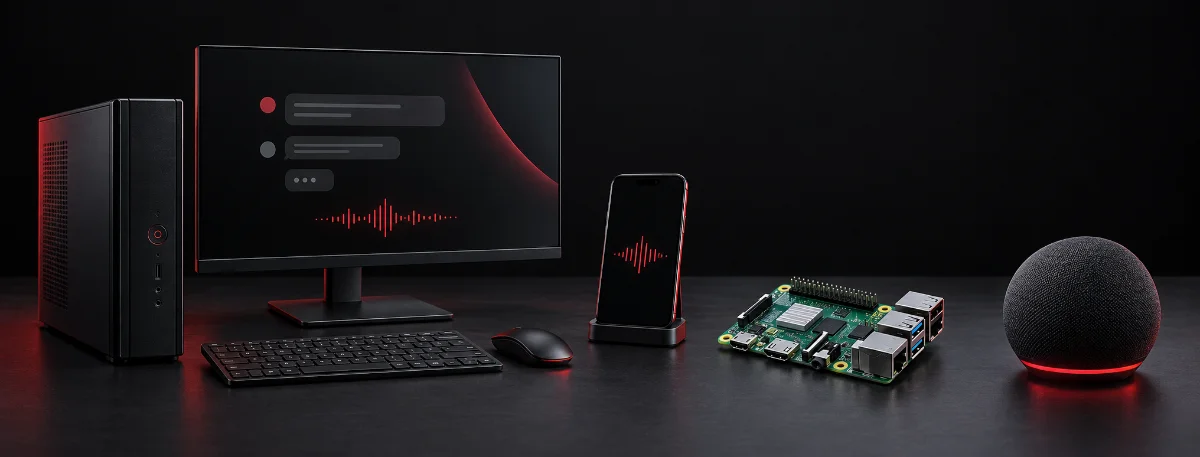
We build AI that runs on your hardware, so your data never leaves it.
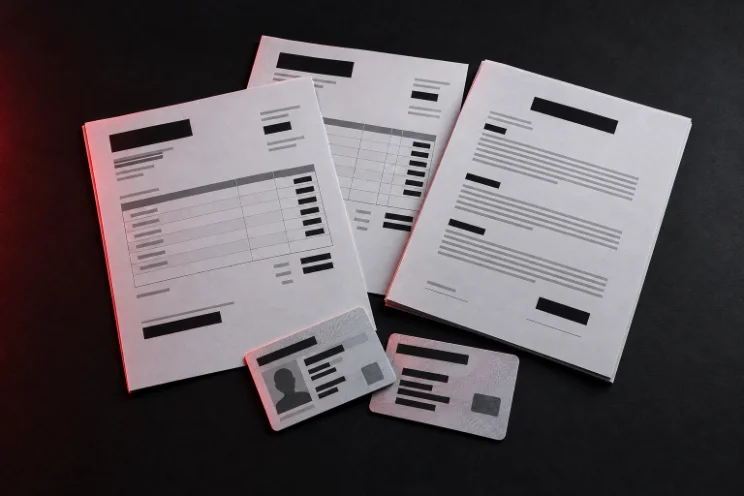
Most AI today works the same way: your document, your customer’s passport, your employee’s CV is uploaded to somebody else’s servers in another country, processed there, and you are asked to trust what happens next. For a great many businesses, that is the single reason they have not adopted AI at all.
REX42 is our answer. There is no API call to anywhere. The model sits inside your building and the data stays there with it. We are not trying to beat the largest models at being large — we are trying to beat them at being useful in the places they cannot go.
Making a model smaller while keeping it useful is the harder engineering task.
There is a comfortable path in AI right now: more data, more GPUs, bigger model. It works, and it requires capital only a handful of organisations on earth possess. Almost none of the small-model problem can be solved by spending money.
The discipline of smallness forces you to understand the problem.
Every parameter has to earn its place, every training example has to be right, and the system around the model has to carry the judgement the model cannot. None of that can be solved by spending money — which is exactly why it is worth doing.
A one-time cost that does not scale with your headcount.
A large model in a data centre costs a subscription per user per month, forever, and the price is set by someone else. A small model on your own hardware costs the hardware — once — plus the electricity.
Lower hardware requirement means lower monthly cost, and lower monthly cost is what puts AI within reach of the businesses currently priced out of it. That benefit lands with the customer, not with us, and that is deliberate.
We are not in the race, and we would not win it.
A system is only useful if it can be deployed where the work is. A model that needs a rack of accelerators cannot run in a clinic, a warehouse office, a shipping agent’s back room, or a government department that is not permitted to send data outside the building — exactly the places where routine document work eats hours of human time every day.
| The scale race | What we work on |
|---|---|
| Bigger models | Models that fit the hardware you already own |
| More GPUs | Efficiency — getting more out of far less |
| General capability | Doing a specific job dependably |
| Cloud APIs | Running inside your own network |
| Impressive benchmarks | Being honest when it does not know |
A research page should say what has been hard, not only what has succeeded.
What the work actually looks like
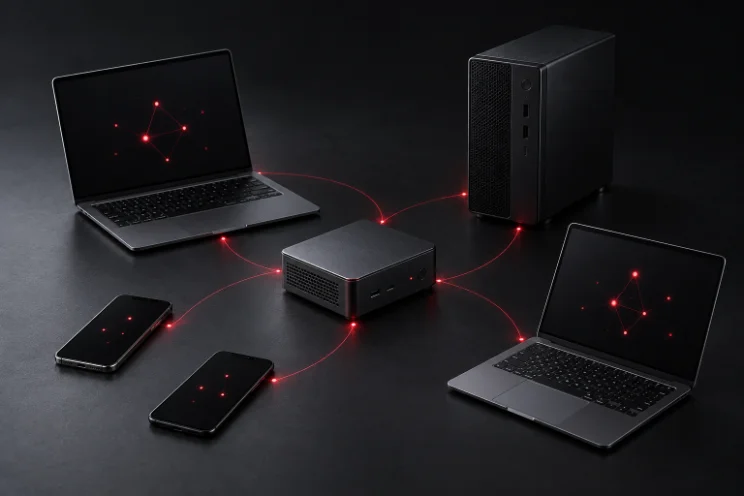
Why should intelligence require one enormous machine, when the world is full of idle small ones?
Every person in the room has a phone. Most have a laptop. Many have a desktop with a graphics card. Each has real computing power, and for most of the day it does nothing at all. Meanwhile the accepted way to train a model is to put a very large number of GPUs in one building and spend weeks of money and electricity.
We are working on a way for many ordinary devices to contribute to training one model together. Each device trains on what it has locally and shares only what it learned — never the underlying data. The contributions are combined into a model better than any one device could produce alone.
Tell us the task and the hardware.
We will tell you honestly whether a small private model can do it — and if it cannot, we will say so.